1011 E Prescott Rd
Salina, KS 67401


PERIODONTAL PROCEDURES
Gum Grafting & Gum Recession
About Gum Grafting
A gum graft (also known as a gingival graft or periodontal plastic surgery), is a collective name for surgical periodontal procedures that aim to cover an exposed tooth root surface with grafted oral tissue.
Exposed tooth roots are usually the result of gingival recession due to periodontal disease. There are other common causes, including overly aggressive brushing and trauma.
Some common types of gum grafting include:
Free gingival graft
Used to thicken gum tissue, a layer of tissue is removed from the palate and relocated to the area affected by gum recession.
Subepithelial connective tissue graft
Used to cover exposed roots, tissue is removed from the outer layer of the palate and relocated to the site of gum recession.
Acellular dermal matrix allograft
Using medically processed, donated human tissue as a tissue source for the graft, this type of graft provides the advantage that there is no need to collect tissue from the patient's palate.

Why Is Gum Grafting Necessary and Beneficial?
Gum grafting is a common periodontal procedure. Though the name might sound frightening, the procedure is commonly performed with excellent results.
Here are some of the major benefits associated with gum grafting:
Reduced Sensitivity
When the tooth root becomes exposed, eating or drinking hot or cold foods can cause extreme sensitivity to the teeth. Gum grafting surgery permanently covers the exposed root, helps reduce discomfort, and restores the good health of the gums.
Improved Appearance
Periodontal disease is characterized by gum recession and inflammation. Gum recession and root exposure can make the teeth look longer than normal and the smile to appear “toothy.” Gum grafting can make the teeth look shorter, more symmetrical and generally more pleasing to look at. In addition, adjacent tissue can be enhanced and augmented during the procedure for aesthetic purposes.
Improved Gum Health
Periodontal disease can progress and destroy gum tissue very rapidly. If left untreated, a large amount of gum tissue can be lost in a short period of time. Gum grafting can help halt tissue and bone loss; preventing further problems and protecting exposed roots from further decay.
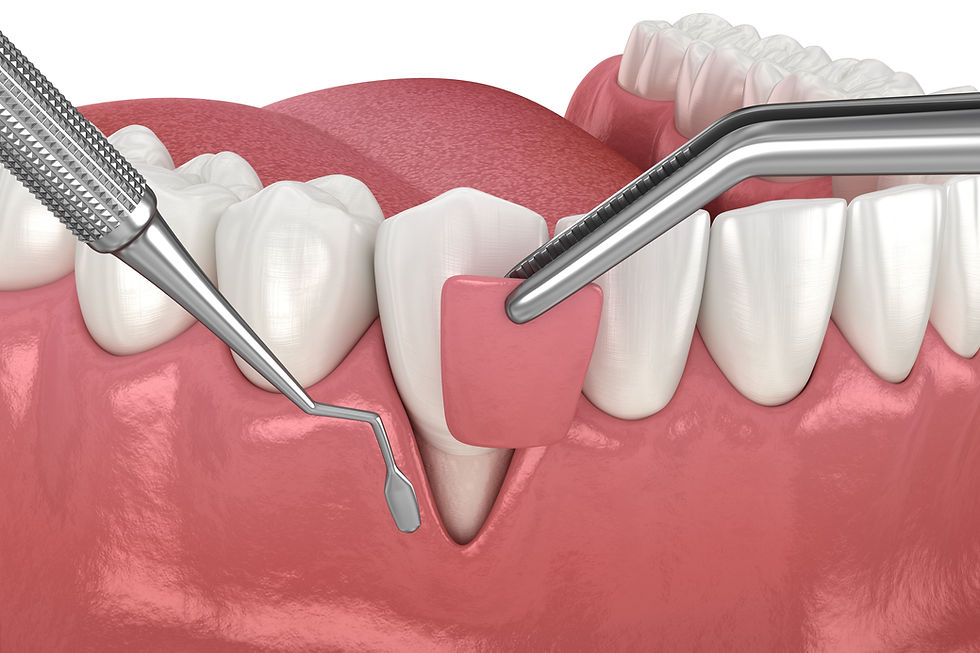
The Process of Gum Grafting
Once the need for gum grafting surgery has been determined, Dr. Moeller may need to perform additional treatments before gum grafting takes place. First, the teeth must be thoroughly cleaned supra and subgingivally to remove calculus (tartar) and bacteria.
The gum grafting procedure is usually performed under local anesthetic. The exact procedure will depend much on whether tissue is coming from the patient’s palate or a tissue bank.
Initially, small incisions will be made at the recipient site to create a small pocket to accommodate the graft. Then a split thickness incision is made and the connective tissue graft is inserted into the space between the two sections of tissue. The graft is usually slightly larger than the recession area, so some excess will be apparent.
Sutures are often placed to further stabilize the graft and to prevent any shifting from the designated site. Surgical material is used to protect the surgical area during the first week of healing. Uniformity and healing of the gums will be achieved in approximately six weeks.
About Gum Recession
Gingival recession (receding gums) refers to the progressive loss of gum tissue, which can eventually result in tooth root exposure if left untreated. Gum recession is most common in adults over the age of 40, but the process can begin in the teenage years.
Gum recession can be difficult to self-diagnose in its earlier stages because the changes often occur asymptomatically and gradually. Regular dental check ups will help to prevent gum recession and assess risk factors.


Signs and Symptoms of Gum Recession
Gum recession is a serious concern and should be evaluated by a periodontist at the first symptom in order to prevent progression into more advanced stages. The following symptoms may be indicative of gum recession:
Sensitive Teeth
When the gums recede enough to expose the cementum protecting the tooth root, the dentin tubules beneath will become more susceptible to external stimuli.
Visible Roots
This is one of the main characteristics of a more severe case of gum recession.
Longer-Looking Teeth
Individuals experiencing gingival recession often have a “toothy” smile. The length of the teeth is perfectly normal, but the gum tissue has been lost, making the teeth appear longer.
Halitosis, Inflammation and Bleeding
These symptoms are characteristic of gingivitis or periodontal disease. A bacterial infection causes the gums to recede from the teeth and may cause tooth loss if not treated promptly.
Causes of Gum Recession
Gum recession is an incredibly widespread problem that dentists diagnose and treat on a daily basis. It is important to thoroughly examine the affected areas and make an accurate diagnosis of the actual underlying problem. Once the cause of the gum recession has been determined, surgical and non surgical procedures can be performed to halt the progress of the recession, and prevent it from occurring in the future.
The most common causes of gingival recession are:
Overaggressive brushing
Over brushing can almost be as dangerous to the gums as too little. Brushing too hard or brushing with a hard-bristled toothbrush can erode the tooth enamel at the gum line, and irritate or inflame gum tissue.
Poor oral hygiene
When brushing and flossing are performed improperly or not at all, a plaque build up can begin to affect the teeth. The plaque contains various bacterial toxins which can promote infection and erode the underlying jawbone.
Chewing tobacco
Any kind of tobacco use has devastating effects on the entire oral cavity. Chewing tobacco in particular, aggravates the gingival lining of the mouth and causes gum recession if used continuously.
Periodontal disease
Periodontal disease can be a result of improper oral hygiene or caused by systemic diseases such as diabetes. The excess sugars in the mouth and narrowed blood vessels experienced by diabetics create a perfect environment for oral bacteria. The bacterium causes an infection which progresses deeper and deeper into the gum and bone tissue, eventually resulting in tooth loss.
Treatment of Gum Recession
Every case of gum recession is slightly different, and therefore many treatments are available. The nature of the problem which caused the recession to begin with needs to be addressed first.
If overly aggressive brushing techniques are eroding the gums, a softer toothbrush and a gentler brushing technique should be used. If poor oral hygiene is a problem, prophylaxis (professional dental cleaning) may be recommended to rid the gum pockets of debris and bacteria. In the case of a severe calculus (tartar) build up, scaling and root planing will be performed to heal the gingival inflammation and clean the teeth.
Once the cause of the gingival recession has been addressed, surgery of a more cosmetic or restorative nature may be recommended. Gum tissue regeneration and gum grafting are two excellent ways to restore natural symmetry to the gums and make the smile look more aesthetically pleasing.
